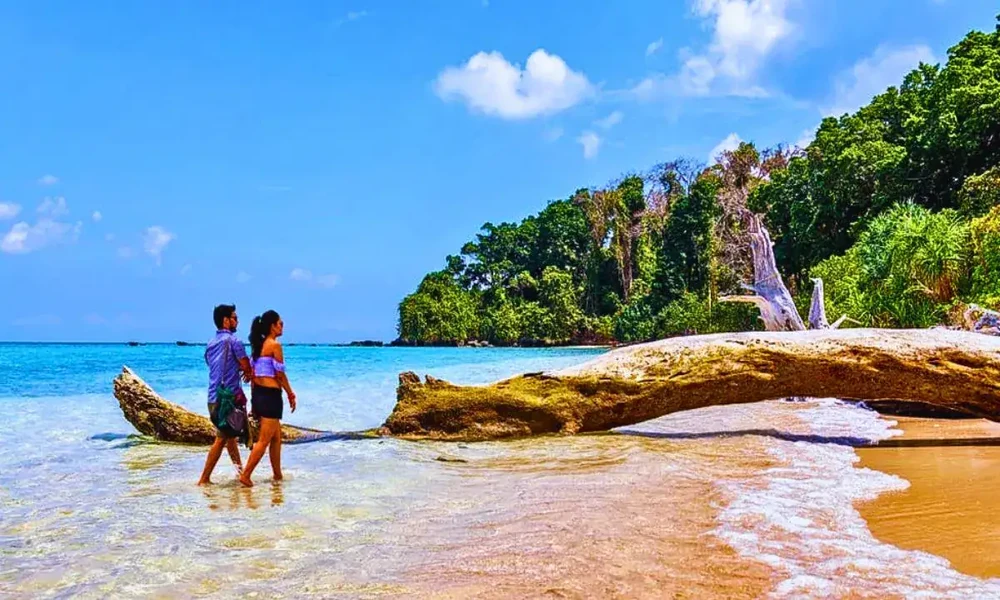
An Andaman trip for students turns textbook chapters into real places. Students walk through the Cellular Jail where freedom fighters were held, snorkel over living coral, and meet communities from across India who settled these islands. It packs history, marine biology, geography and culture into one hands-on week.
Why is an Andaman trip good for students?
Because the islands teach four school subjects at once, without a single worksheet. You read about the freedom struggle in a Class 8 textbook. Here you stand inside the cell where it happened. That shift, from page to place, is what makes the trip stick.
On my visits with a few school groups, the change in energy was clear. Kids who yawn through a history lecture go quiet inside the Cellular Jail. Here is what an Andaman trip really builds:
- History you can walk into: the freedom movement, colonial rule, and World War II, all in one town.
- Marine science up close: coral reefs, fish, and mangroves seen through a mask, not a diagram.
- Geography that makes sense: islands, tides, volcanoes, and how distance shapes a place.
- Culture and people: indigenous tribes and settler communities from every corner of India.
- Life skills: teamwork, budgeting pocket money, and the confidence of a first snorkel.
What history can students learn in the Andamans?
The Andamans hold one of India’s most important freedom-struggle sites, so history here feels personal, not distant. The star is the Cellular Jail in Port Blair, now officially called Sri Vijaya Puram.
The British built the jail in 1906 to send political prisoners across the sea, far from the mainland. Its seven wings spread out like spokes on a wheel, so one guard tower could watch every corridor. Students learn why it was feared as Kala Pani, and read the names of prisoners like Vinayak Damodar Savarkar on the memorial.
- Cellular Jail timings: open 9:00 AM to 5:00 PM, most days; entry around Rs 30 for Indian visitors (as of 2026, confirm on arrival).
- Light and sound show: an evening show narrates the jail’s story with light and voice; tickets are roughly Rs 300 for adults and Rs 150 for children (as of 2026), with Hindi and English slots.
- More history nearby: the colonial ruins on Ross Island, now Netaji Subhas Chandra Bose Dweep, plus Japanese World War II bunkers dotted around Port Blair.
A small tip for teachers: book the light and sound show for the first evening, before you tour the cells in daylight. The story lands harder when students already know the faces behind the walls.
What science and nature can students see?
Plenty, and most of it is alive and moving. The Andamans sit on coral reefs, so a snorkel session doubles as a biology class you cannot fake in a lab.
- Coral reefs: North Bay and Elephant Beach near Havelock (Swaraj Dweep) have shallow reefs where beginners can safely see coral and fish.
- Marine national park: the Mahatma Gandhi Marine National Park at Wandoor protects reefs and mangroves close to Port Blair.
- Geology in action: limestone caves and mud volcanoes at Baratang show how water and gas reshape rock over time.
- Museums for a rainy hour: the Samudrika Marine Museum and the Anthropological Museum explain reef life and island tribes when the weather turns.
Students learn why coral matters and why touching it kills it. That lesson in conservation tends to outlast the trip. Many come home careful about sunscreen and plastic in a way no poster achieved.
Who lives in the Andamans, and what can students learn about its people?
The Andamans are a small map of two very different Indias, which makes them a strong lesson in diversity and respect. The islands are home to indigenous tribes and to settlers from across the mainland.
- Indigenous communities: the Great Andamanese, Onge, Jarawa, Sentinelese and Nicobarese have lived here for thousands of years.
- Why some islands are off-limits: the Sentinelese and other groups are legally protected, and outsiders cannot enter their land. Students learn the ethics of leaving isolated people alone.
- Settler culture: Bengali, Tamil, Telugu and Ranchi families, many descended from former prisoners and post-Partition settlers, now share one small town.
Walk through a Port Blair market and you hear four languages in one lane. For students, that is a living answer to a civics question: how do very different people build one community?
Best time to go and do students need a permit?
The best window for a student trip is October to mid-May, when seas are calm and ferries run on time. Avoid the June to September monsoon, when rough water cancels boats and ruins tight school schedules. Skies can still cloud over in October, so keep a buffer day.
Permits are simple for Indian students. You do not need a special permit to visit Port Blair, Havelock, Neil (Shaheed Dweep), Baratang or Diglipur. Tribal reserve areas are strictly off-limits to everyone. Foreign students need a Restricted Area Permit, usually issued on arrival at the airport.
- How to get there: fly to Port Blair (Sri Vijaya Puram) from Chennai, Kolkata, Delhi or Bengaluru; ships also sail from Chennai, Kolkata and Visakhapatnam and take about three to four days.
- How many days: five to six days covers the history, one island, and the main museums without rushing tired students.
- Rough budget: plan around Rs 15,000 to Rs 25,000 per student for a five to six day group tour, excluding flights, depending on group size and season (approximate, as of 2026; get a fresh quote).
Planning your Andaman student trip
A student group has needs a normal tour does not: safe transport, verified guides, permits sorted in advance, and a schedule that keeps forty kids fed and counted. This is where a local operator earns its place.
andamantourism.org is based in the Andamans, not on the mainland. That means real relationships with island hotels and boat operators, first-hand knowledge of ferry timings and permit rules, and staff who know which reefs are safe for first-time snorkelers. For a teacher juggling a big group, that on-ground help is worth far more than a cheaper quote from a faraway agency.
FAQ: Andaman trip for students
Is an Andaman trip safe for school student groups?
Yes, when planned with a local operator. The islands are calm and low-crime, and water activities like snorkeling are run with instructors and life jackets. Stick to guided sites and a fixed head-count routine.
How many days do students need in Andaman?
Five to six days is the sweet spot. That covers Port Blair’s history, one island such as Havelock, the marine park and museums, without exhausting the group or the budget.
Do students need a permit to visit the Andamans?
Indian students need no special permit for the main tourist islands. Tribal reserves are off-limits to all. Foreign students get a Restricted Area Permit on arrival at the airport.
What should students pack for an Andaman trip?
Light cotton clothes, a swimsuit, reef-safe sunscreen, a refillable water bottle, sturdy sandals, and any personal medicines. A dry bag for phones on boat rides helps a lot.
How much does an Andaman student trip cost?
As a rough guide, budget around Rs 15,000 to Rs 25,000 per student for five to six days excluding flights (approximate, as of 2026). Group size, season and hotel class change this, so ask for a current quote.
Planning a school or college group? Explore itineraries, permits and student-friendly activities at www.andamantourism.org